Wellcome Funding for new project on the history of hospital nights
I am thrilled to be able to share that I have recently received a Wellcome Trust-funded Career Development Award for the research project, The Night Shift 1850-present: Reimagining Sleep, Work and Wellbeing for Healthcare Professionals in English and Scottish Hospitals. The Career Development Award (CDA) programme aims to support mid-career researchers to develop their research capabilities, drive innovative programmes of work and deliver significant shifts in understanding related to human life, health and wellbeing. The project will take place over five years, beginning in early 2027 and running through 2032. Read more here.
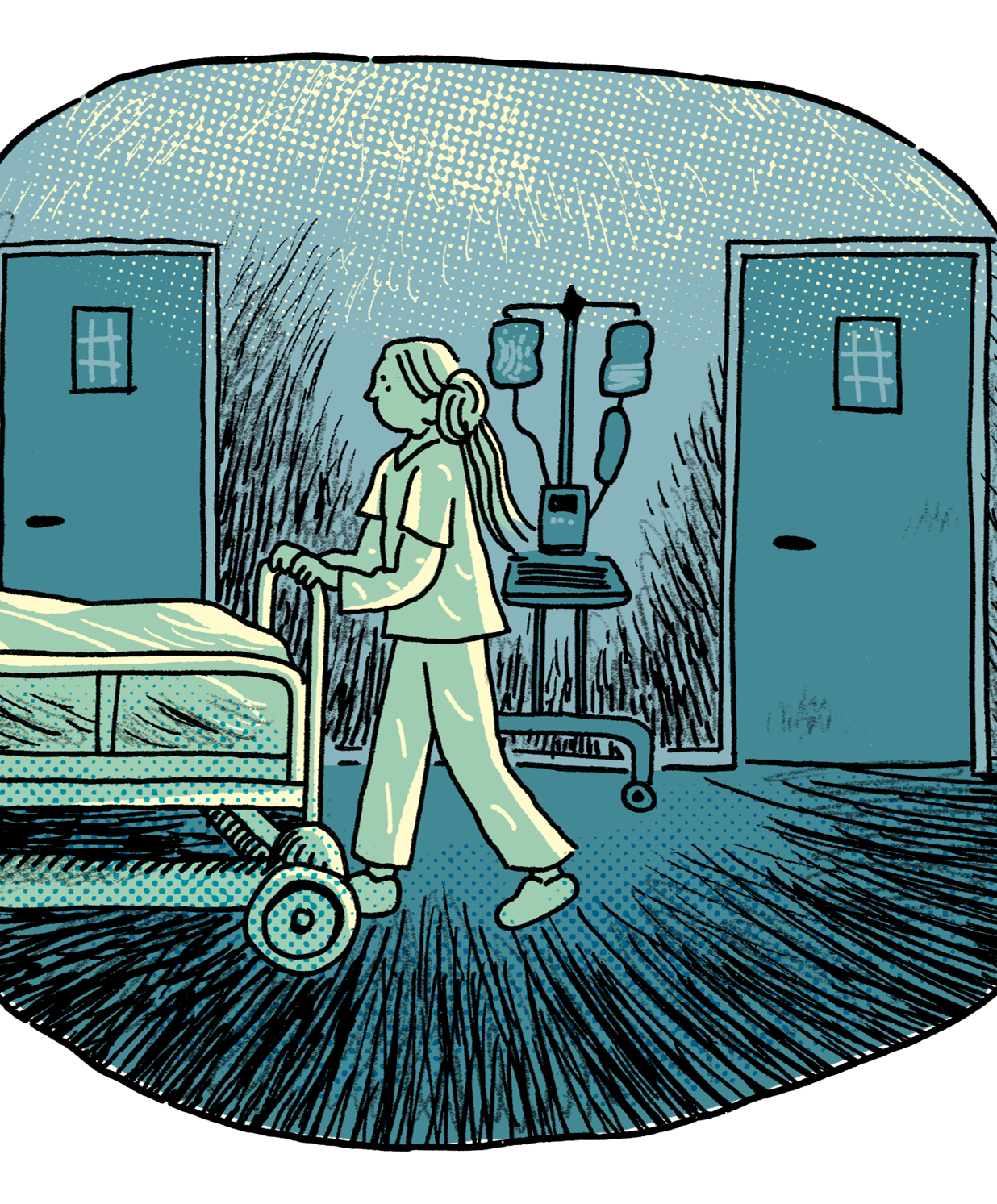
Nurse on the night shift, from ‘Tales from the Chronobiology Lab’ by Sofie Louise Dam and Kristin Hussey.
Project Summary:
The Night Shift is a project that responds to the contemporary moment where the health service and healthcare professionals in the UK are being pushed to the brink. A lack of jobs, poor pay, violence against staff members and fatigue contribute to poor workforce health, satisfaction and retention. Among such challenges – this project turns attention to the lived experience of staff – and aims to re-imagine sleep, wellbeing and work for the NHS’s diverse staff base – particularly the almost one million faced with the challenge of working at night.
Decades of clinical, epidemiological and sociological research have demonstrated the negative physical, mental and social effects of night shift working. However, this robust research base has done little to shift working practices in the NHS. Why is the problem of night work so tricky in the context of the hospital? As a 2025 report from the HSSIB highlights –the answer may in fact lie in history: ‘There are barriers to acknowledging the risk posed by staff fatigue. These include historical beliefs and norms around working long and additional hours, pride and ‘heroism’ of NHS staff.' Launch report: Fatigue risk in healthcare and its impact on patient safety
Night Shift will be the first systematic history of the hospital night shift in England and Scotland from the 19th century to the present day. It asks – why do we do what we do now, and how might it be otherwise?
The project will create a new conceptual framework for understanding night work in the hospital setting which significantly shifts our understand of the embodied experience, the management and socio-cultural contexts of night work in the hospital. It brings together historical and contemporary qualitative and participatory action research to inform and transform practice.
This project focuses on hospital staff – rather than patients. Breaking down traditional silos within history, it makes a bold contribution by looking at the complex ecology of healthcare professionals who work at night – from doctors to surgeons to nurses, porters and cleaners – interrogating their identities, embodied experience, and their interrelationships.
Weaving together medical and environmental humanities with labour history – it thinks about the complex ways in which the general hospital ward functions on the ground and as a part of a wider economy of care delivery. It hones in on professional cultures and institutional narratives to reimagine practices, policies and ways of being that make staff sleep and wellbeing as critical to the delivery of nighttime care as patient safety.
Find out more:
Over the next few months I will be working to develop a dedicated project website - more coming soon. I will also be hiring Postdoctoral Research Assistant/Associate roles to support the project and will provide more details in the coming months.
If you’d like to learn more, Newcastle University has recently circulated a press release, or feel free to send me a message!