❋
The Night Shift 1850-Present: Reimagining sleep, work and wellbeing
An interdisciplinary project that interrogates the complicated and long history of fatigue in the hospital. Funded by a Career Development Award (CDA) from the Wellcome Trust - 2027-2032. 
Professor Alison Steven, Professor of Research in Nursing and Health Professions Education at Northumbria University: “I'm delighted to support this fascinating and important project led by Dr Hussey, which brings a fresh historical perspective to night shift working. Night shift working is an area I know well through my previous research and current Workforce Voices work into NHS workforce fatigue. I look forward to seeing it translate into practical change for today's NHS staff.”
The Night Shift 1850-Present: Re-imagining Sleep, Work and Wellbeing for Healthcare Professionals in English and Scottish Hospitals
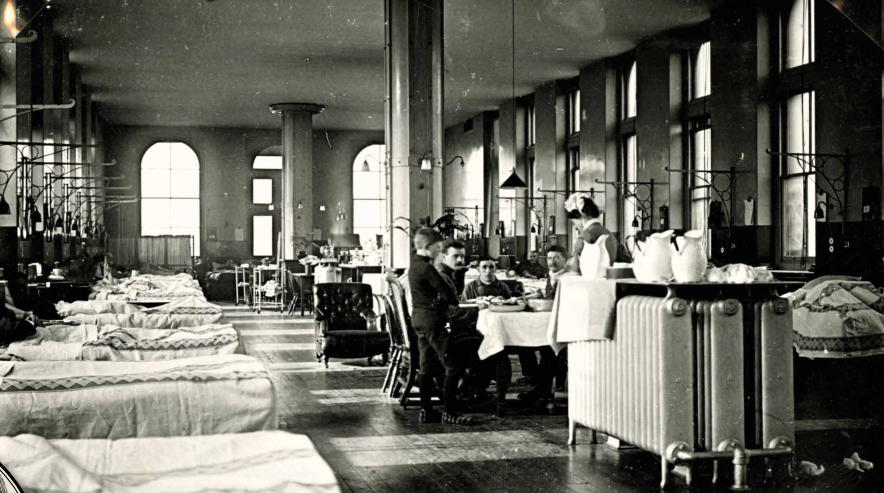
Night Shift aims to radically re-imagine sleep work and wellbeing for healthcare professionals working at night on the general hospital ward in England and Scotland. Complimenting a burgeoning field of clinical and epidemiological research on healthcare fatigue, the project will reveal the ways in which long standing working cultures and professional identities have normalized unsafe and unsustainable working conditions. Working across medical, environmental and labour histories, the project will provide the first systematic history of the British hospital at night. By drawing on cutting edge research in the studies of the night, sleep and everyday temporalities, Night Shift will also deliver a new framework to understand the lived experience of night shift work in the hospital.
The project team will bring historical insights into conversation with contemporary challenges through semi-structured interviews and Participatory Action Research (PAR) with night shift workers. This interdisciplinary work will feed into better policy and practice supported by partnerships with three NHS Foundation Trusts in the North East of England, as well as the charity sector. Over five and a half years, the project team will deliver an ambitious programme of academic, public engagement and policy outputs, including an exhibition at the Royal College of Nursing (RCN).
You can read in more detail about the project and its aims in this press release from Newcastle University.
❋ A new historyWill create the first systematic history of the experience and management of the night shift in English and Scottish hospitals since the nineteenth century.
❋ Working in partnershipThe project works in close partnership with the Northumbria Healthcare NHS Foundation Trust, the Royal College of Nursing (RCN) and the Sleep Charity.
❋ Building from participationThe project foregrounds the needs and experiences of hospital night shift workers across grades - from porters to healthcare assistants, nurses, doctors, surgeons and more.
Professor Vari M Drennan, Chair, Royal College of Nursing (RCN) History of Nursing Forum: “I am delighted that the RCN History of Nursing Forum is collaborating with this project. The history of night shifts has rarely been the focus of study, and this project will uncover important information about this integral part of nurses' lives and nursing. Greater understanding of the history and context of night shift work will enable us to better support nursing staff across the UK through the RCN’s current work on policy and professional guidance.”
❋ Making practice and policy changeNight Shift works with audiences, researchers, managers, policy makers and decision makers to turn research insights into real-world change.
Dr Emily Rainsford, Research and Evidence Lead at Insights North East: “At Insights North East we bridge the gap between academic evidence and policy making. We are excited to work with Dr Hussey on this project to support the work on integrating and translating the findings into actionable insights for the right people at the right level in the policy ecosystem. We also look forward to contributing to the broader understanding of how history as a discipline can have impact on current policy making."